


I used to be a purist. You know the type. If it wasn’t written in IntelliJ with strict type checking and a pom.xml file I configured myself, it wasn’t “real” engineering. I looked at low-code platforms the way a chef looks at a microwave dinner—convenient, sure, but soulless.
But it’s 2026. The deadline for our new inventory service was last Tuesday. And honestly? I didn’t write the CRUD endpoints. I didn’t write the database schema migrations. I didn’t even write the JWT authentication filter.
I dragged a few boxes on a screen, connected a “PostgreSQL” node to a “REST API” node, and hit export. Then I spent my actual energy on the hard part: the inventory reconciliation logic that no visual tool can figure out.
The Shift: From “Toy” to “Scaffold”
Three years ago, tools like Fastgen started making noise about “visual backend building.” At the time, we laughed. The code they generated was spaghetti—unmaintainable garbage that you’d never put in production. But the landscape shifted while we weren’t looking (and yes, I know I’m sounding old now).
Today, the modern Java low-code ecosystem isn’t about replacing code. It’s about scaffolding. The visual builders now spit out clean, Spring Boot-compatible Java classes. They handle the plumbing. My job has shifted from “Pipe Layer” to “Water Quality Inspector.”
Here is where the friction usually happens: integrating the generated “low-code” backend with your custom business logic. You usually end up with an interface that the visual tool expects you to implement for the complex stuff.

For example, the visual builder handles the GET /items and POST /items. But when an item is returned, we need to run a complex depreciation algorithm. The tool generates an interface for us to fill in:
package com.company.inventory.hooks;

import java.math.BigDecimal;
import java.time.LocalDate;

// This interface is the "bridge" between the low-code CRUD
// and our custom high-code logic.
public interface DepreciationCalculator {

    BigDecimal calculateCurrentValue(String assetId, BigDecimal originalPrice, LocalDate purchaseDate);

    // Default method allows the low-code platform to fail gracefully
    // if we haven't deployed the custom logic yet.
    default boolean isDepreciated(LocalDate purchaseDate) {
        return purchaseDate.isBefore(LocalDate.now().minusYears(5));
    }
}
This is the sweet spot. I don’t want to write the SQL to fetch the asset. I just want to do the math.
The “Glue” Code: Where We Actually Live
While the visual tools handle the data movement, Java 21+ features are where we spend our time. The low-code platform might dump a raw list of transaction records into our lap, but it’s up to us to make sense of them. This is why I tell juniors: don’t learn how to write a controller; learn how to manipulate streams.
I had to patch a “visual” workflow yesterday that was pulling data from three different legacy systems. The visual tool aggregated them, but the data was messy. I wrote this processor to clean it up before sending it back to the low-code pipeline:
public List<AssetRecord> sanitizeData(List<RawInput> rawInputs) {
    return rawInputs.stream()
        .filter(input -> input.status() != null && !input.status().isEmpty())
        .map(input -> {
            // Using Java records for immutable data transfer
            // This is safer than the mutable maps most low-code tools default to
            return new AssetRecord(
                input.id(),
                input.value().max(BigDecimal.ZERO), // Prevent negative values
                input.acquiredAt()
            );
        })
        .collect(Collectors.groupingBy(AssetRecord::id)) // Deduplicate by ID
        .entrySet().stream()
        .map(entry -> entry.getValue().getFirst()) // Take the first valid occurrence
        .toList();
}
See? The low-code tool moves the bytes. I sanitize the logic. It’s a partnership, not a replacement.
Feature Flags: The Safety Net
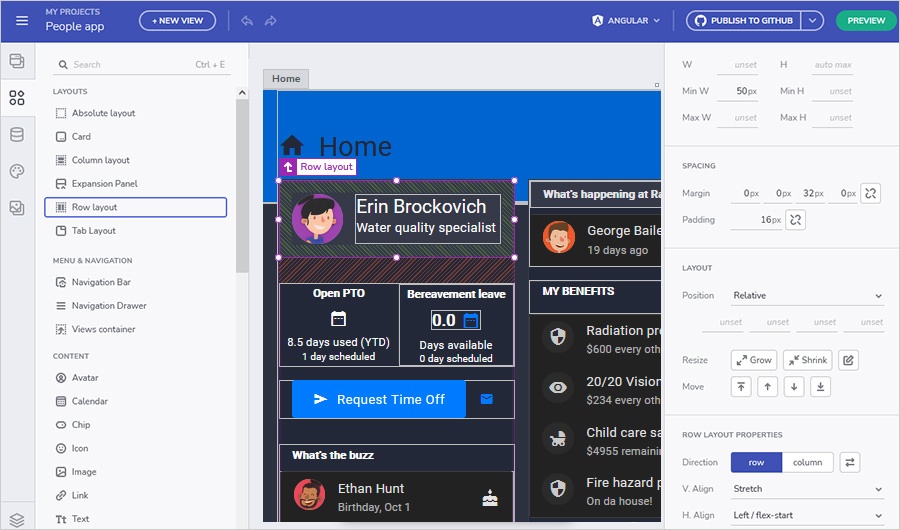
Here’s the thing nobody tells you about mixing low-code and custom code: deployment timing is a nightmare. The visual backend updates instantly when you hit “Publish.” Your custom Java service updates when the CI/CD pipeline finishes 20 minutes later.
If the visual backend expects a method that doesn’t exist yet, everything crashes. Boom. 500 errors everywhere.
This is why tools like FF4J (Feature Flipping for Java) have become absolutely critical for me. We don’t just use feature flags for A/B testing users anymore; we use them to toggle between “Low-Code Implementation” and “Legacy Implementation” at runtime.
I wrap my integrations in a feature flag check. If the low-code service is acting up, or if the schema changed unexpectedly, I can flip a switch in the FF4J console and revert to the hard-coded logic instantly.
import org.ff4j.FF4j;

public class InventoryService {

    private final FF4j ff4j;
    private final LowCodeConnector lowCode;
    private final LegacyRepository legacy;

    public InventoryService(FF4j ff4j, LowCodeConnector lowCode, LegacyRepository legacy) {
        this.ff4j = ff4j;
        this.lowCode = lowCode;
        this.legacy = legacy;
    }

    public InventoryItem getItem(String id) {
        // Check if the "new-visual-backend" feature is enabled
        if (ff4j.check("enable-visual-backend-v2")) {
            try {
                return lowCode.fetchItem(id);
            } catch (Exception e) {
                // Fallback automatically if the low-code service is flaky
                System.err.println("Low-code service failed, falling back to legacy");
                return legacy.findById(id);
            }
        }

        return legacy.findById(id);
    }
}
This pattern saved my bacon last week. The visual builder team pushed a change that renamed a JSON field from itemId to item_id. It broke the mapping. I didn’t have to redeploy or rollback code. I just logged into the dashboard, flipped enable-visual-backend-v2 to false, and went to lunch. The system quietly reverted to the old SQL queries.
The Verdict
There’s a lot of noise about AI writing code for us, but I think the visual low-code approach is actually more practical for the boring stuff. It’s deterministic. You know exactly what the visual flow does. AI code can hallucinate; a visual line connecting Box A to Box B is pretty unambiguous.
I’m not saying I love it. I still miss writing raw SQL sometimes (weird, I know). But I love going home at 5 PM more. If letting a tool generate my CRUD boilerplate buys me that time, I’ll take it.