

The landscape of enterprise software development is witnessing a pivotal transformation as we move through November 2025. The Java ecosystem, once criticized for its slow evolution, has become a beacon of rapid innovation and stability. With the recent release cycles of OpenJDK and the finalizing of specifications for Jakarta EE 12, developers are finding themselves equipped with more powerful tools than ever before. This article delves deep into the latest Java news, exploring how updates to the Liberica JDK, advancements in the Jakarta EE specification, and the maturation of frameworks like Quarkus and Open Liberty are reshaping how we build cloud-native applications.
From the rise of Java low-code news platforms like OpenXava to the granular control offered by modern build tools like Gradle, the ecosystem is expanding horizontally and vertically. Whether you are following Spring Boot news or keeping an eye on Java virtual threads news, understanding these shifts is crucial for maintaining a competitive edge. In this comprehensive guide, we will break down these updates, provide practical code examples, and offer actionable insights for integrating these technologies into your production environments.
The Evolution of Jakarta EE 12 and Core Standards
One of the most significant headlines in Jakarta EE news is the progress toward Jakarta EE 12. As the enterprise standard for Java, Jakarta EE continues to decouple itself from legacy constraints, focusing heavily on the “Cloud Profile.” The community, including major contributors behind Open Liberty and WildFly, has pushed for a more streamlined API that embraces modern architectural patterns.
Streamlining Data Access with Jakarta Data
A standout feature in the recent Java EE news cycle is the maturity of the Jakarta Data specification. Historically, developers relied heavily on Hibernate news and JPA implementation details to handle data access. Jakarta Data standardizes the Repository pattern, allowing developers to create interfaces that the container implements automatically, reducing boilerplate code significantly.
This moves beyond the traditional DAO patterns taught in Java self-taught news resources and aligns standard Java with the convenience developers love in Spring Data. Here is how a modern Jakarta Data repository looks in a Jakarta EE 12 environment:
package com.enterprise.inventory;

import jakarta.data.repository.BasicRepository;
import jakarta.data.repository.Repository;
import jakarta.data.repository.Find;
import jakarta.data.repository.Query;
import java.util.List;
import java.util.stream.Stream;

// The entity class representing our data
@Entity
public class Product {
    @Id
    private Long id;
    private String name;
    private String category;
    private double price;

    // Getters, Setters, Constructors
}

// The declarative repository interface
@Repository
public interface ProductRepository extends BasicRepository<Product, Long> {

    // Automatic implementation based on method name
    @Find
    List<Product> findByCategory(String category);

    // Custom JPQL query support
    @Query("SELECT p FROM Product p WHERE p.price < :maxPrice ORDER BY p.price ASC")
    Stream<Product> findBudgetItems(double maxPrice);

    // Pagination and sorting are built-in
    @Find
    List<Product> findByNameLike(String namePattern, PageRequest pageRequest);
}
This snippet demonstrates the power of standardization. By leveraging the BasicRepository interface, we gain immediate access to CRUD operations without writing implementation logic. This is a massive leap forward for Java SE news enthusiasts looking to transition into enterprise development without the steep learning curve of managing `EntityManager` manually.
Runtime Efficiency: Liberica JDK, Quarkus, and Performance
The runtime environment is just as critical as the code itself. Recent BellSoft Liberica news highlights significant patch set updates that improve security and performance, particularly for Alpine Linux deployments (Alpaquita). As a downstream distribution of OpenJDK, Liberica is gaining traction alongside Amazon Corretto news and Azul Zulu news due to its unified support for JavaFX and robust container integration.
Quarkus and the Compile-Time Revolution
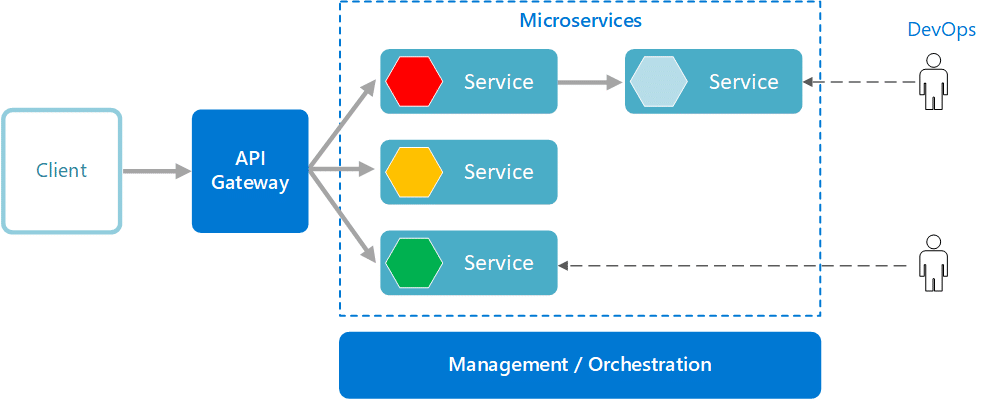
Parallel to JDK updates, Quarkus news continues to dominate the conversation regarding “Supersonic Subatomic Java.” The framework’s ability to perform build-time optimizations makes it ideal for Kubernetes environments. A key focus in late 2025 is the seamless integration of Project Loom news (Virtual Threads) into Quarkus’s reactive core.
Virtual threads allow developers to write blocking-style code that is handled non-blocking by the runtime. This negates the need for complex reactive chains (Mono/Flux) in many use cases, simplifying Java concurrency news discussions. Below is an example of a Quarkus resource leveraging Virtual Threads to handle high-concurrency I/O operations:
package com.acme.shipping;

import io.smallrye.common.annotation.RunOnVirtualThread;
import jakarta.inject.Inject;
import jakarta.ws.rs.GET;
import jakarta.ws.rs.Path;
import jakarta.ws.rs.PathParam;
import java.net.URI;
import java.net.http.HttpClient;
import java.net.http.HttpRequest;
import java.net.http.HttpResponse;
import java.util.concurrent.StructuredTaskScope;
import java.util.concurrent.ExecutionException;

@Path("/shipping")
public class ShippingResource {

    private final HttpClient client = HttpClient.newHttpClient();

    // Leveraging Project Loom: This method runs on a virtual thread
    @GET
    @Path("/{orderId}")
    @RunOnVirtualThread
    public ShippingStatus checkStatus(@PathParam("orderId") String orderId) {
        // We can use blocking HTTP calls here without blocking an OS thread
        // This scales to millions of concurrent requests

        try (var scope = new StructuredTaskScope.ShutdownOnFailure()) {

            // Fetch data from two different legacy systems in parallel
            var warehouseTask = scope.fork(() -> fetchWarehouseData(orderId));
            var courierTask = scope.fork(() -> fetchCourierData(orderId));

            // Wait for both to complete (blocking the virtual thread, not the carrier thread)
            scope.join();
            scope.throwIfFailed();

            return new ShippingStatus(warehouseTask.get(), courierTask.get());

        } catch (InterruptedException | ExecutionException e) {
            throw new RuntimeException("Failed to fetch shipping data", e);
        }
    }

    private String fetchWarehouseData(String id) throws Exception {
        // Simulate network delay
        Thread.sleep(100);
        return "Packed";
    }

    private String fetchCourierData(String id) throws Exception {
        // Simulate network delay
        Thread.sleep(150);
        return "In Transit";
    }
}

record ShippingStatus(String warehouse, String courier) {}
This code utilizes Java structured concurrency news concepts. The StructuredTaskScope ensures that if one task fails, the scope handles the cleanup, preventing thread leaks—a common pitfall in older Java 8 news era concurrency models.
Advanced Tooling: Gradle, JDKUpdater, and OpenXava
Development velocity is heavily influenced by the tools we use. Gradle news indicates a strong push towards the Kotlin DSL as the default, offering better type safety and IDE support than Groovy. Furthermore, tools like JDKUpdater are becoming essential for maintaining security across large organizations by automating the patching of local JDK installations.
Low-Code and Rapid Prototyping
On the rapid application development front, OpenXava has released updates that further bridge the gap between domain-driven design and user interface generation. This touches on Java low-code news, where the goal is to write business logic in Java and let the framework handle the HTML/JS generation. While often overlooked by hardcore backend engineers, these tools are vital for internal enterprise tools.
Modern Build Configuration
Let’s look at how a modern Gradle build script configures toolchains to ensure consistent Java versions across a team, addressing common Maven news and build consistency debates:
plugins {
    java
    application
    id("com.diffplug.spotless") version "6.25.0"
}

repositories {
    mavenCentral()
}

java {
    // Explicitly define the toolchain. Gradle detects if this JDK is missing
    // and can provision it automatically (e.g., from Adoptium or Corretto).
    toolchain {
        languageVersion.set(JavaLanguageVersion.of(21))
        vendor.set(JvmVendorSpec.BELLSOFT) // Targeting Liberica JDK
    }
}

dependencies {
    implementation("jakarta.platform:jakarta.jakartaee-api:11.0.0")
    implementation("io.quarkus:quarkus-arc:3.15.0")

    // Testing libraries
    testImplementation("org.junit.jupiter:junit-jupiter:5.11.0")
    testImplementation("org.mockito:mockito-core:5.12.0")
}

tasks.test {
    useJUnitPlatform()
    // Optimization for test execution
    maxParallelForks = (Runtime.getRuntime().availableProcessors() / 2).coerceAtLeast(1)
}

application {
    mainClass.set("com.example.Main")
}
This configuration explicitly requests a specific vendor (BellSoft), ensuring that all developers on the team are using the exact same runtime environment, reducing “it works on my machine” issues. This level of precision is part of the broader JVM news trend toward reproducible builds.
Integrating AI and Modern Language Features
No discussion on Java news in 2025 is complete without addressing Artificial Intelligence. Spring AI news and libraries like LangChain4j news have made it incredibly easy to integrate Large Language Models (LLMs) into standard Java applications. This convergence of traditional object-oriented programming with probabilistic AI models creates new design challenges.
Furthermore, language features solidified in Java 21 news and Java 17 news, such as Records and Pattern Matching for Switch, are now the baseline for clean code. When combined with AI service calls, the code becomes remarkably expressive.
Practical AI Integration with Modern Java
Here is an example of a service that processes user intent using a hypothetical AI client, utilizing Java’s pattern matching to handle the structured output cleanly:
package com.ai.assistant;

import java.util.concurrent.CompletableFuture;

public class IntentProcessor {

    // Sealed interface for type-safe pattern matching
    public sealed interface UserIntent permits BookingIntent, InfoIntent, ComplaintIntent {}

    public record BookingIntent(String destination, String date) implements UserIntent {}
    public record InfoIntent(String topic) implements UserIntent {}
    public record ComplaintIntent(String issueId, String sentiment) implements UserIntent {}

    public String processQuery(String userQuery) {
        // Simulate an AI classification call (e.g., via LangChain4j)
        UserIntent intent = classifyIntent(userQuery);

        // Java 21+ Pattern Matching for Switch
        return switch (intent) {
            case BookingIntent(var dest, var date) ->
                "Initiating booking sequence for " + dest + " on " + date;

            case InfoIntent(var topic) ->
                "Searching knowledge base for: " + topic;

            // Guarded pattern example
            case ComplaintIntent(var id, var sentiment) when "ANGRY".equals(sentiment) ->
                "Escalating ticket " + id + " to human supervisor immediately.";

            case ComplaintIntent(var id, var sentiment) ->
                "Logging feedback for ticket " + id;
        };
    }

    private UserIntent classifyIntent(String query) {
        // Mock implementation of AI logic
        if (query.contains("book")) return new BookingIntent("Paris", "2025-12-01");
        if (query.contains("broken")) return new ComplaintIntent("TKT-99", "ANGRY");
        return new InfoIntent("General");
    }
}
This snippet highlights how Project Amber features (Pattern Matching) simplify complex logic branches that often arise when handling unpredictable AI outputs. It represents a maturation of Java wisdom tips news, moving away from complex Visitor patterns to concise, readable structures.
Best Practices and Optimization Strategies
As we adopt these new tools, we must adhere to disciplined engineering practices. Java security news remains a top priority; keeping dependencies updated via automated tools (like Dependabot or Renovate) is non-negotiable. With the introduction of Project Panama news (Foreign Function & Memory API), accessing native libraries is safer, but requires strict memory management oversight.

Handling Nulls and State
A recurring theme in Null Object pattern news is the continued relevance of avoiding null checks. While Optional is great for return types, modern Java emphasizes immutable data (Records) and smart constructors to prevent invalid state from ever existing. When dealing with legacy code or Java Card news related embedded systems where memory is tight, the Null Object pattern remains a performance-friendly alternative to Optional wrapper object overhead.
Additionally, for high-performance applications, monitoring Java performance news regarding Garbage Collection (ZGC and Shenandoah) is vital. In 2025, ZGC is highly tuned for sub-millisecond pauses, making it the default choice for the microservices described in the Quarkus section above.
Conclusion
The Java ecosystem in late 2025 is vibrant, diverse, and faster than ever. From the enterprise stability of Jakarta EE 12 to the cutting-edge runtime enhancements in Liberica JDK and Quarkus, developers have a rich palette of tools. The integration of Java virtual threads and structured concurrency has fundamentally solved the “callback hell” of previous asynchronous models, while build tools like Gradle ensure our pipelines are robust and reproducible.
Whether you are following JobRunr news for background processing or diving into Spring AI news, the key takeaway is adaptability. The language is evolving to meet the demands of cloud-native computing and AI without sacrificing the backward compatibility that made it famous. Now is the time to audit your current stack, upgrade your JDKs, and embrace the modern features that make Java a joy to write.