


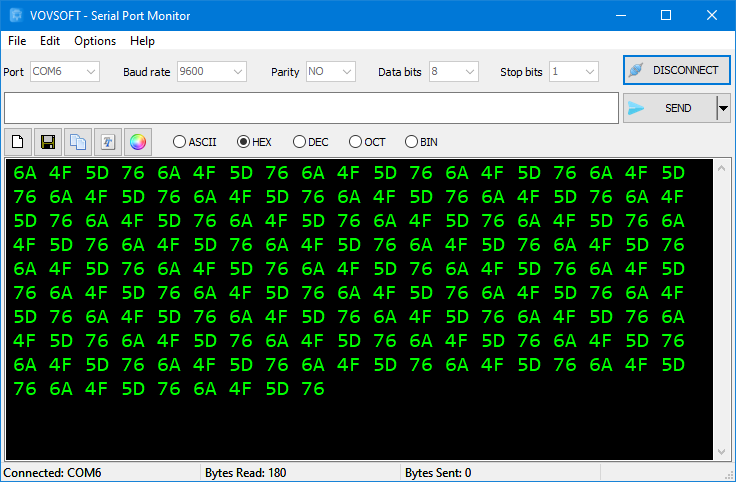
I was staring at a serial console output at 2 AM last Tuesday, watching a stream of hexadecimal bytes scroll by from a legacy sensor node, when it hit me. We spend so much time talking about massive Large Language Models and cloud orchestration that we often forget where the data actually originates. I’ve been working on a project recently that involves retrofitting older industrial equipment with connectivity modules, and surprisingly, Java ME (Micro Edition) is still the most reliable tool I have for the job.
While the broader tech world is obsessed with the latest Java 25 snapshots or Project Valhalla prototypes, those of us in the embedded trenches are dealing with a different set of constraints. The recent chatter around Java ME news often gets buried under the avalanche of server-side updates, but if you look closely at what’s happening with edge computing and IoT, the platform is quietly adapting to a cloud-first world.
Connecting Constrained Devices to OCI
One of the biggest shifts I’ve noticed this year is the push to connect even the smallest microcontrollers directly to heavy-hitters like Oracle Cloud Infrastructure (OCI). It used to be that we’d dump data into a local gateway and let a Linux box handle the heavy lifting. Now, with improved network stacks in Java Micro Edition news updates, I’m writing code that talks directly to REST endpoints from the device itself.
The challenge, of course, is doing this without the bloat of modern HTTP client libraries. You can’t just pull in a massive dependency when you have kilobytes of heap. I stick to the Generic Connection Framework (GCF), which is ancient but incredibly efficient. Here is how I structure a lightweight connector to push telemetry data to an OCI function:
import javax.microedition.io.*;
import java.io.*;

public class CloudConnector {

    private String endpoint;
    private String authToken;

    public CloudConnector(String endpoint, String token) {
        this.endpoint = endpoint;
        this.authToken = token;
    }

    public void pushTelemetry(String jsonData) throws IOException {
        HttpConnection hc = null;
        OutputStream os = null;
        InputStream is = null;

        try {
            // Open the connection with read/write access
            hc = (HttpConnection) Connector.open(endpoint);

            // Set request method and headers
            hc.setRequestMethod(HttpConnection.POST);
            hc.setRequestProperty("Content-Type", "application/json");
            hc.setRequestProperty("Authorization", "Bearer " + authToken);
            hc.setRequestProperty("Content-Length", String.valueOf(jsonData.length()));

            // Send data
            os = hc.openOutputStream();
            os.write(jsonData.getBytes());
            os.flush();

            // Check response code
            int rc = hc.getResponseCode();
            if (rc != HttpConnection.HTTP_OK && rc != HttpConnection.HTTP_CREATED) {
                throw new IOException("Cloud error: " + rc);
            }

            // Read response (optional, for ack)
            is = hc.openInputStream();
            int ch;
            while ((ch = is.read()) != -1) {
                // Process response if needed
            }

        } finally {
            if (is != null) is.close();
            if (os != null) os.close();
            if (hc != null) hc.close();
        }
    }
}
This code isn’t flashy. It doesn’t use annotations or dependency injection. But it runs on a chip that costs less than a cup of coffee and has been running without a restart for six months. That’s the reliability I need.
Security at the Hardware Level

Security is the other major theme dominating Java Card news right now. With the rise of “Zero Trust” architectures, the network no longer trusts the device just because it’s inside the firewall. The device has to prove its identity cryptographically. I’ve been integrating secure elements more frequently, using Java Card applets to store private keys that never leave the hardware.
I find that many developers overlook the importance of the Null Object pattern in embedded security. When a sensor fails or a security token is missing, you don’t want the application to crash; you want it to fail safely. I use a strict interface approach to handle secure storage, ensuring that if the hardware secure element is busy or disconnected, the system degrades gracefully rather than halting.
public interface SecureStorage {
    byte[] signData(byte[] input);
    boolean verifySignature(byte[] data, byte[] signature);
}

// A safe fallback implementation
public class NullSecureStorage implements SecureStorage {

    public byte[] signData(byte[] input) {
        // Log warning: Security module unavailable
        System.err.println("WARNING: Using Null Storage - No signature generated");
        return new byte[0];
    }

    public boolean verifySignature(byte[] data, byte[] signature) {
        return false; // Fail closed by default
    }
}
This approach aligns with the broader Java security news trends we see in the enterprise: defense in depth. Even on a micro device, failing closed is critical.
The Edge AI Pipeline
Let’s address the elephant in the room: AI. Everyone wants to talk about Spring AI news or large language models, but those models are useless without clean data. My recent work has focused on using Java ME devices as the “pre-cortex” for these AI systems. We aren’t running the LLM on the microcontroller, but we are doing significant signal processing to reduce noise before sending data to the cloud.
Since we often lack the fancy Stream API found in newer Java SE versions, I usually implement a custom processing pipeline. It mimics the functional style of Java 17 news features but keeps memory allocation strictly under control. Here is a pattern I use for filtering sensor noise:
public class SensorProcessor {

    // Simple moving average filter to smooth data
    public static int[] smoothData(int[] rawData, int windowSize) {
        if (rawData == null || rawData.length < windowSize) {
            return rawData;
        }

        int[] smoothed = new int[rawData.length - windowSize + 1];

        for (int i = 0; i < smoothed.length; i++) {
            long sum = 0;
            for (int j = 0; j < windowSize; j++) {
                sum += rawData[i + j];
            }
            smoothed[i] = (int) (sum / windowSize);
        }

        return smoothed;
    }

    // Threshold detector
    public static boolean detectAnomaly(int[] data, int threshold) {
        for (int i = 0; i < data.length; i++) {
            if (data[i] > threshold) {
                return true;
            }
        }
        return false;
    }
}
This code prepares the data locally. If detectAnomaly returns true, only then do we wake up the radio and transmit the snippet to OCI for analysis by a GenAI model. This hybrid approach—dumb edge, smart cloud—is where I see the most practical value in Java ecosystem news today.

Tooling and Developer Experience
One frustration I’ve had for years is the tooling gap. However, things are improving. I’m seeing better integration with standard build tools. While we used to rely on obscure IDE plugins, I can now script a lot of my build process using standard patterns familiar to anyone following Maven news or Gradle news. It’s not perfect, but being able to run unit tests on logic (like the SensorProcessor above) using JUnit news patterns before deploying to the device saves me hours of flashing time.
I recently set up a CI/CD pipeline that compiles my Java ME code, runs the logic tests in a standard JVM (since the logic is pure Java), and then packages the JAR for deployment. It bridges the gap between the “move fast” ethos of Java self-taught news developers and the rigid requirements of embedded engineering.
Why This Matters Now
You might wonder why I’m writing about this now. It’s because the convergence is finally happening. For a long time, Oracle Java news seemed bifurcated: massive cloud features on one side, and maintenance mode for embedded on the other. But with the rise of Edge AI and the need for zero-trust security everywhere, the “Micro” in Java ME is becoming critical infrastructure.
We are building systems where a Java Card authenticates a session, a Java ME runtime gathers and cleans sensor data, and an OCI backend processes that data to update a digital twin. It is a seamless chain.
If you are a developer looking at the Java job market or just trying to stay relevant, don’t ignore the low-level stuff. Understanding how to manage memory manually, how to open a raw socket connection, and how to implement security without a framework are skills that make you a better engineer, even if you spend most of your time in Spring Boot.
My advice? Dust off that old development board. Try to send a POST request to a cloud function without using a library. It’s painful, it’s raw, but it teaches you exactly how the internet actually works.