


The Unlikely, Powerful Alliance: How Java is Supercharging the Low-Code Movement
The low-code/no-code (LCNC) revolution promises to democratize software development, enabling business users and “citizen developers” to build applications with minimal traditional coding. For years, this movement seemed at odds with the world of enterprise Java—a realm known for its robustness, verbosity, and “high-code” pedigree. However, a fascinating trend is emerging: Java is not being replaced by low-code; it’s becoming its powerful, scalable engine. The latest Java low-code news isn’t about obsolescence, but about a powerful synergy.
This alliance makes perfect sense. While low-code platforms excel at creating user interfaces and simple workflows, they often require a robust backend for complex business logic, data processing, and enterprise integrations. This is where the mature Java ecosystem news comes into play. From the performance enhancements in modern Java versions like Java 17 and Java 21 to the powerful frameworks like Spring Boot, Java provides the industrial-strength foundation that LCNC platforms need to build serious, enterprise-grade applications. This article explores this convergence, diving into the technical details, practical code examples, and future trends shaping this exciting space.
Section 1: Core Concepts – Bridging High-Code Power with Low-Code Speed
The fundamental principle behind Java’s role in low-code is abstraction. Low-code platforms provide a visual interface that, under the hood, often generates or interacts with code. For many enterprise-focused platforms, that generated code is Java. This approach leverages the decades of investment in the JVM, security, and performance optimizations that the Java world has perfected.
Metaprogramming and Code Generation: The Engine Room of Low-Code
At its core, a low-code platform is a sophisticated code generator. A user drags and drops a component to create a data entry form. In the background, the platform might generate a Java Persistence API (JPA) entity, a Spring Data repository, and a REST controller. This allows for rapid development without sacrificing the performance and reliability of a compiled, statically-typed language. Java’s reflective capabilities and strong typing make it an ideal target for such generation, ensuring that the resulting code is both predictable and maintainable.
Let’s look at a conceptual example. Imagine a low-code tool needs to generate a simple JPA entity from a user-defined model. The platform would take metadata (field names, types) and use a template engine or simple string building to produce the Java source code.
package com.lowcode.generator;

import java.util.List;
import java.util.stream.Collectors;

// Using a Java 17+ record for the metadata definition
public record EntityField(String name, String type, boolean isId) {}

public class EntityGenerator {

    public String generateJpaEntity(String className, List<EntityField> fields) {
        StringBuilder sb = new StringBuilder();

        // Package and imports
        sb.append("package com.generated.entities;\n\n");
        sb.append("import jakarta.persistence.Entity;\n");
        sb.append("import jakarta.persistence.Id;\n");
        sb.append("import jakarta.persistence.GeneratedValue;\n\n");

        // Class definition
        sb.append("@Entity\n");
        sb.append("public class ").append(className).append(" {\n\n");

        // Generate fields based on metadata
        for (EntityField field : fields) {
            if (field.isId()) {
                sb.append("    @Id\n");
                sb.append("    @GeneratedValue\n");
            }
            sb.append("    private ").append(field.type()).append(" ").append(field.name()).append(";\n\n");
        }

        // Generate getters and setters (simplified for brevity)
        for (EntityField field : fields) {
            String capitalizedName = field.name().substring(0, 1).toUpperCase() + field.name().substring(1);
            // Getter
            sb.append("    public ").append(field.type()).append(" get").append(capitalizedName).append("() {\n");
            sb.append("        return this.").append(field.name()).append(";\n");
            sb.append("    }\n\n");
            // Setter
            sb.append("    public void set").append(capitalizedName).append("(").append(field.type()).append(" ").append(field.name()).append(") {\n");
            sb.append("        this.").append(field.name()).append(" = ").append(field.name()).append(";\n");
            sb.append("    }\n\n");
        }

        sb.append("}\n");

        return sb.toString();
    }

    public static void main(String[] args) {
        EntityGenerator generator = new EntityGenerator();
        List<EntityField> customerFields = List.of(
            new EntityField("id", "Long", true),
            new EntityField("firstName", "String", false),
            new EntityField("email", "String", false)
        );
        String generatedCode = generator.generateJpaEntity("Customer", customerFields);
        System.out.println(generatedCode);
    }
}
This simple generator demonstrates how a low-code platform can translate a high-level definition into concrete, compilable Java code, tapping into powerful frameworks like Jakarta EE (as seen in the latest Jakarta EE news).

Section 2: Implementation Details – Building Custom “Pro-Code” Components
The true power of combining Java and low-code emerges when professional developers are empowered to extend the platform. No LCNC tool can anticipate every possible business need or integration point. This is where Java developers step in to build custom components, connectors, and business logic that can be seamlessly plugged into the low-code environment.
Defining Extensible Interfaces for Custom Connectors
A common pattern is for the low-code platform to define a set of interfaces that custom components must implement. This creates a clear contract between the low-code environment and the custom Java code. The platform handles the lifecycle, configuration, and invocation of these components, while the Java developer focuses purely on the business logic.
Consider an interface for a generic data connector that a low-code application could use to fetch data from an external system. This is a perfect use case for modern Java features like Streams and `Optional` to handle data and potential null values gracefully, reflecting best practices from recent Java 8 news and beyond.
package com.lowcode.extensions;

import java.util.Map;
import java.util.Optional;
import java.util.stream.Stream;

/**
 * An interface for a custom data connector.
 * Low-code platforms can discover and invoke implementations of this interface.
 */
public interface CustomDataConnector {

    /**
     * A unique name for this connector, used in the low-code UI.
     * @return The connector's name.
     */
    String getName();

    /**
     * Fetches a single record by its ID.
     * @param id The unique identifier for the record.
     * @return An Optional containing a Map of the record's data, or empty if not found.
     */
    Optional<Map<String, Object>> findById(String id);

    /**
     * Fetches all records, potentially filtered by a set of parameters.
     * @param filterParams A map of parameters provided by the low-code application.
     * @return A Stream of Maps, where each map represents a record.
     */
    Stream<Map<String, Object>> findAll(Map<String, String> filterParams);
}

/**
 * A concrete implementation for a fictional "Product API".
 * This JAR could be uploaded to the low-code platform.
 */
class ProductApiConnector implements CustomDataConnector {

    @Override
    public String getName() {
        return "ProductAPI";
    }

    @Override
    public Optional<Map<String, Object>> findById(String id) {
        System.out.println("Fetching product with ID: " + id);
        // In a real application, this would make an HTTP call.
        // Using mock data for demonstration.
        if ("prod-123".equals(id)) {
            return Optional.of(Map.of("id", "prod-123", "name", "Quantum Widget", "price", 99.99));
        }
        return Optional.empty();
    }

    @Override
    public Stream<Map<String, Object>> findAll(Map<String, String> filterParams) {
        System.out.println("Finding all products with filters: " + filterParams);
        // Mock implementation that returns a stream of products.
        return Stream.of(
            Map.of("id", "prod-123", "name", "Quantum Widget", "price", 99.99),
            Map.of("id", "prod-456", "name", "Hyper Spanner", "price", 149.50)
        );
    }
}
By packaging this implementation into a JAR and uploading it to the low-code platform, a citizen developer could now visually build an application that displays product data without ever writing a line of Java. They simply select the “ProductAPI” connector from a dropdown menu. The backend, powered by Java, handles the complex integration logic, leveraging tools like Maven or Gradle for dependency management (keeping up with Maven news and Gradle news is crucial here).
Section 3: Advanced Techniques – AI, Concurrency, and the Modern Java Edge
The synergy between Java and low-code extends beyond simple data connectors. The latest advancements in the Java ecosystem, particularly in AI and concurrency, are making it an even more compelling backend for sophisticated LCNC applications.
Generative AI and Java: The New Frontier of Intelligent Low-Code
The explosion of Generative AI and Large Language Models (LLMs) is a game-changer. Low-code platforms are increasingly incorporating AI features, such as “build an app from a text description.” Powering these features requires robust backend services that can interact with AI models. The Java community has responded swiftly with powerful libraries. The latest Spring AI news and the emergence of libraries like LangChain4j provide first-class support for building AI-powered applications in Java.
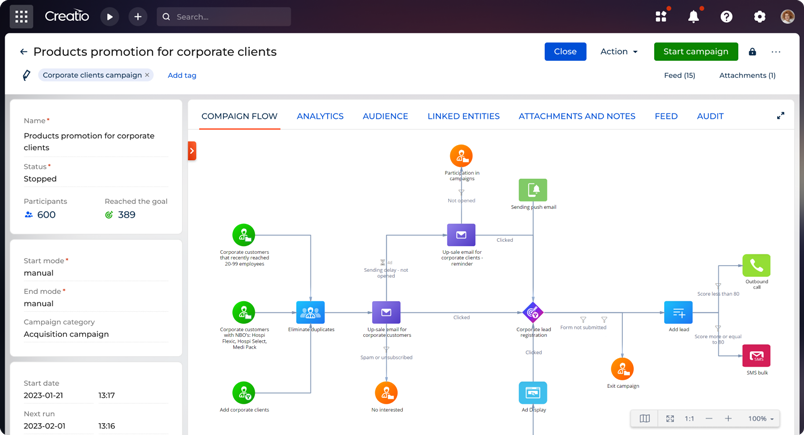
A Java developer can create a custom component that provides summarization, sentiment analysis, or data extraction services to a low-code application. Here is a practical example using LangChain4j to create a simple customer service assistant.
package com.lowcode.ai;

import dev.langchain4j.model.chat.ChatLanguageModel;
import dev.langchain4j.model.openai.OpenAiChatModel;
import dev.langchain4j.service.AiServices;

import java.util.Scanner;

public class AiPoweredSupport {

    // Define an interface that describes the AI's capabilities.
    // LangChain4j will implement this interface for you.
    interface SupportAssistant {
        String chat(String userMessage);
    }

    public static void main(String[] args) {
        // IMPORTANT: Replace "your-api-key" with your actual OpenAI API key.
        // It's recommended to load this from environment variables or a config file.
        String apiKey = System.getenv("OPENAI_API_KEY");
        if (apiKey == null || apiKey.equals("your-api-key")) {
            System.out.println("Please set your OPENAI_API_KEY environment variable.");
            return;
        }

        // Create the chat model instance
        ChatLanguageModel model = OpenAiChatModel.builder()
                .apiKey(apiKey)
                .modelName("gpt-3.5-turbo")
                .temperature(0.7)
                .build();

        // Create the AI service
        SupportAssistant assistant = AiServices.create(SupportAssistant.class, model);

        // Interact with the AI assistant
        System.out.println("Assistant is ready. Type 'exit' to quit.");
        Scanner scanner = new Scanner(System.in);
        while (true) {
            System.out.print("You: ");
            String userInput = scanner.nextLine();
            if ("exit".equalsIgnoreCase(userInput)) {
                break;
            }
            String response = assistant.chat(userInput);
            System.out.println("Assistant: " + response);
        }
        scanner.close();
    }
}
This Java backend service could be exposed as a REST API that the low-code platform calls, enabling incredibly powerful AI features to be added to applications with simple drag-and-drop components.
Handling Scale with Project Loom and Virtual Threads
A successful low-code application can generate a massive number of concurrent requests to its backend. The latest Project Loom news, which delivered virtual threads in Java 21, is a monumental development for this use case. Virtual threads allow Java applications to handle millions of concurrent tasks with high efficiency and without the complexity of traditional asynchronous programming. This is a perfect fit for the microservices that often power low-code backends. This development in Java concurrency news ensures that as low-code apps scale, the Java foundation can handle the load effortlessly, maintaining high Java performance news standards.
Section 4: Best Practices and Future Outlook
To successfully integrate Java into a low-code strategy, it’s essential to follow best practices that ensure maintainability, security, and performance.
Key Considerations for Pro-Code Components
- Modularity and Granularity: Keep custom Java components small, focused, and single-purpose. A component should do one thing well, whether it’s connecting to a specific API or performing a complex calculation. This makes them easier to test, debug, and reuse.
- Rigorous Testing: The custom Java code is the foundation upon which the low-code application is built. It must be thoroughly tested. Leveraging the rich testing ecosystem, including the latest JUnit news and tools like Mockito, is non-negotiable.
- Security First: Any custom component that interacts with external systems or data is a potential security vulnerability. Follow all standard Java security news and best practices: validate inputs, handle credentials securely (e.g., using a secrets manager), and sanitize outputs.
- Dependency Management: Use build tools like Maven or Gradle to manage dependencies. This ensures reproducible builds and helps avoid version conflicts, a common pitfall in complex projects. The diverse landscape of JVMs, from Oracle Java news to builds from Adoptium, Azul Zulu, and Amazon Corretto, offers flexibility, but requires consistent dependency management.
- Asynchronous Operations: For long-running tasks like report generation or data synchronization, use background job processing libraries. The latest JobRunr news shows how easily you can offload work to background threads, preventing the low-code UI from becoming unresponsive.
The future will likely see even deeper integration. Projects like Project Valhalla, which aims to improve memory layout and performance, will further enhance the JVM’s efficiency, making Java an even more attractive target for code generation. We can expect low-code platforms to offer more sophisticated “pro-code” escape hatches, allowing developers to inject Java code at more points in the application lifecycle.
Conclusion: A Symbiotic Future
The narrative that low-code will eliminate the need for professional developers is proving to be a myth. Instead, the industry is witnessing a powerful convergence where low-code platforms handle the routine aspects of application development, freeing up Java developers to focus on the high-value, complex challenges. By building robust, secure, and scalable backend components, Java developers are the architects of the powerful engines that drive the low-code revolution.
For the modern Java developer, this is not a threat but a massive opportunity. Embracing low-code means leveraging your skills to accelerate business value delivery, building the critical integrations and custom logic that turn a simple LCNC application into a true enterprise solution. The latest Java SE news and framework updates are not just for traditional development anymore; they are becoming the essential toolkit for the next generation of hybrid, low-code-powered applications.